
Higher Education's Untapped Potential
Why Canada’s Higher Education Institutions Must Engage Career-Focused Adult Learners

In an era of rapid technological change and evolving job markets, Canadian Higher Education Institutions (HEIs) face a critical juncture. To remain relevant and thrive, they must prioritize the often-overlooked demographic of Career-Focused Adult Learners (CFALs). As discussed in the first installment of this newsletter series, CFALs normally fall outside the missions, visions, and strategies of HEIs. While references to variations of 'lifelong learning' and specialized units offering some programming in this area exist, it is fair to say that serving CFALs is not a priority for HEIs. This issue of the newsletter argues that Canadian HEIs must shift their focus to fully engage CFALs, both as an obligation to their graduates and a significant opportunity for growth. I begin by considering the rapidly changing world of work in which post-secondary graduates will spend their next 40 or so years. I frame this in terms of both the obligation and opportunity HEIs have to continue the educational relationship with their students long after graduation.
Before getting into it, though, I want to do some level setting by further clarifying who I am referring to when I say CFAL. The previous newsletter provided a general description but I need to be a bit clearer to explain why CFALs are important to HEIs. The table below provides greater clarity:
CFALs are:
Adults with prior post-secondary education (degree or diploma).
Working professionals seeking to upgrade or upskill.
Individuals needing continuous education in a changing job market.
CFALs are not:
Individuals required to take highly specialized professional upgrading (e.g., medical doctors, lawyers).
Students pursuing graduate studies to become disciplinary experts (e.g., PhDs).
In this article, I focus on the majority of students who have completed a post-secondary program and entered the workforce in a wide variety of jobs. These students need to continuously upgrade or upskill to advance in their careers and are the least supported educational demographic. Currently, they lack sufficient and appropriate opportunities for continuing education, as well as public funding to support such efforts. They exist within a culture that has not historically emphasized continuing education for CFALs. Let us now examine why support for CFALs needs to be dramatically increased and why this change should be a strategic priority for HEIs.
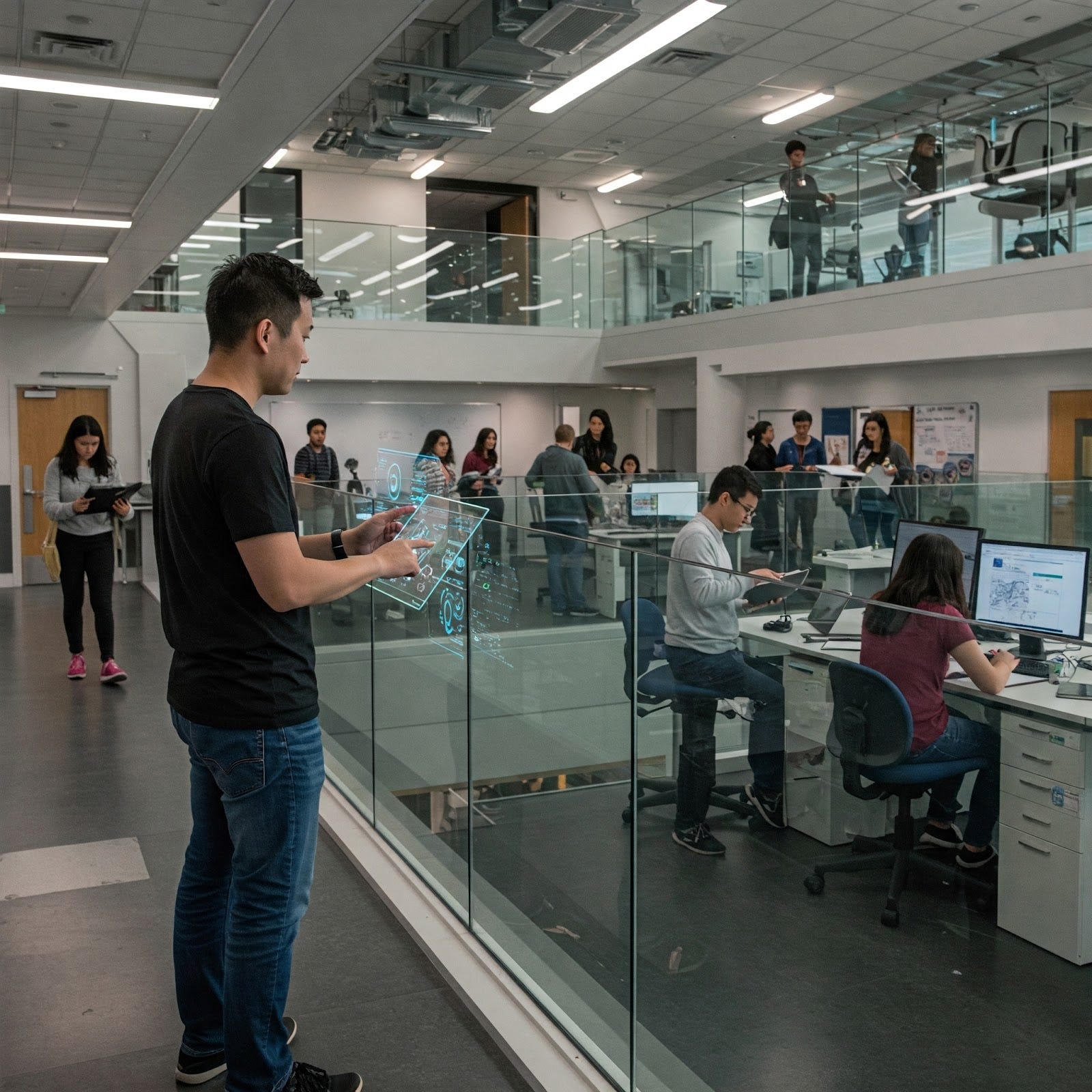
Adapting to a Changing World of Work
Not long ago, CFALs who completed post-secondary education could expect careers requiring little additional education. For the most part, foundational post-secondary education plus experience gained was enough to provide a complete career path, often with a single or small set of employers. Things are changing. The World Economic Forum’s Future Jobs Report 2025, studied a dataset of 1.2 billion formal jobs and predicted a significant structural shift in the labor market. Projections suggest the creation of 170 million new jobs alongside the displacement of 92 million existing roles. This turnover represents 22% of the total formal employment within the dataset. These changes are mainly driven by technological advancement and an evolving job market and skill gaps. The best current example of such a driver is the increasing integration of artificial intelligence (AI) into the workplace. HEIs can no longer take a 'one-and-done' approach where a traditional degree or diploma is seen as sufficient for a lifetime career. While initial foundational post-secondary programs remain crucial and must adapt to the new reality, it is clear that education will be ongoing throughout the career paths of graduates. This evolving landscape presents HEIs with both a crucial obligation and a significant opportunity.
An Obligation to Ongoing Educational Opportunities
Among other things, all HEIs are responsible for preparing their students for employment. Some programs are clearly focused on particular professions while others are more foundational in nature. Students, governments, society, and HEIs themselves expect that graduating students will be successful in the job market. With the job market changing rapidly, however, HEIs must urgently consider their approach to fulfill this obligation. One thing is clear: the time of thinking about post-secondary education as ‘one-and-done’ is already over. HEIs cannot in good conscience send their graduates out into the job market without providing them with options to future-proof their preparation for successful careers and jobs they cannot even confidently anticipate.

If the obligation argument is not compelling enough, consider the business risk. The value of post-secondary education is already widely questioned, often due to the perceived cost—time and money—versus the benefit in the job market. As the job market shifts, this return on investment (ROI) concern will become harder to justify. HEIs that address this concern are likely to attract more prospective students than those that do not. Moreover, institutions that fail to address the ongoing educational needs of their alumni (i.e., CFALs) risk negative reputational consequences, being seen as out-of-touch or less relevant, especially if other HEIs offer better options. This obligation must be met.
An Opportunity for Growth
The good news is that providing career relevant upgrading for graduates of HEIs is an excellent opportunity with minimal risk. Serving CFALs enhances the value proposition offered to new students being recruited into traditional programs. In addition to offering excellent preparation programs, a longer term commitment can be made to continuing to support them with career relevant programming once they enter the workforce. As for graduates, the close relationships that HEIs want to maintain can be deepened and enhanced by an ongoing commitment to helping them advance their careers and deal with a volatile job market. Furthermore, the CFAL market is underdeveloped, offering ample opportunity for enrollment growth beyond serving an HEI’s own graduates. In fact, CFALs are the largest underserved education market in Canada.
Of course, no discussion of the Canadian post-secondary market would be complete without recognizing that most HEIs are currently experiencing a financial crisis, one that has no relief in sight. An opportunity that both opens a new growth market and revenue streams, and enhances the value proposition for traditional students should be of significant interest to HEIs. From a business growth perspective, there are few opportunities with such clear market development potential for HEIs. The target audience is already well aware of Canadian HEIs and has likely attended one or more. The challenge for HEIs is in adjusting their current positioning—that is, how customers or students view the HEI. Specifically, CFALs must see the relevance of traditional post-secondary institutions to their ongoing educational needs. This transition offers a much-needed lifeline for Canada’s HEIs.
Looking Ahead
As I conclude this installment, I hope that I have convinced you that Canada’s HEIs have both an obligation and a huge opportunity when it comes to serving CFALs. I would invite you to stay tuned for the next installments where I will continue this exploration by considering what HEIs need to offer CFALs in order to be successful along with the changes that will be necessary within HEIs as they begin to do this. The tentative titles are:
Serving the CFAL: Academics and Student Experience
How HEIs Need to Adapt to Serve the CFAL
Stay informed and receive future installments. Follow me on LinkedIn or subscribe using the button below.